
When Expertise Becomes a Platform
Scientific Credibility in the Age of Personal Monetization

Re-Enter the Present
In the span of a decade, the public image of the scientist has taken on a new shape. A tenured professor records a three-hour podcast on circadian rhythms, cites primary literature with fluency, and translates molecular pathways into practical guidance for a global audience. The same episode may include sponsor acknowledgments or affiliate links for products positioned as adjacent to the research. The arrangement is transparent, legal, and increasingly common. It is also a configuration that would have been structurally difficult in earlier eras of scientific life.

Andrew Huberman provides a clear illustration of this shift. Trained as a neuroscientist and affiliated with a major research university, he operates in both the academic and media ecosystems. His platform extends well beyond peer-reviewed journals, reaching millions of listeners who encounter scientific claims not through institutional channels but through direct subscription. Commercial partnerships accompany this reach, linking scientific authority to consumer markets in visible and explicit ways.
The significance of this example lies less in the particulars of one individual and more in what the model represents. The modern scientist can consolidate credentialed expertise, mass communication, and monetization within a single personal platform. The gatekeepers of earlier centuries, whether aristocratic societies, naval ministries, or federal grant panels, have not disappeared. They no longer monopolize the distribution of authority. Audience size, platform growth, and market alignment introduce new incentive structures that operate alongside, and at times outside, traditional institutional oversight.
The question is not whether scientists should speak publicly or earn income beyond their salaries. It is how the consolidation of expertise, influence, and commerce within a single individual reshapes the norms that once governed scientific credibility.

What Is Actually New?
What distinguishes the present is not that science is entangled with power, but how that entanglement operates. The scale of audience reach has expanded dramatically. Individual scientists can now communicate directly with millions, far beyond the circulation of journals or institutional reports. The speed of distribution has also accelerated. Findings, interpretations, and hypotheses move globally within hours, often before formal peer review.
At the same time, authority can be monetized directly. Platforms allow scientists to translate credibility into revenue through sponsorships, subscriptions, and affiliated products, without institutional mediation. This introduces a tighter coupling between attention and income than existed in earlier scientific systems. Alongside this shift, distinctions between types of evidence can blur. Peer-reviewed studies, preliminary findings, and practical recommendations often appear within the same stream, reducing the contextual separation that traditionally signaled levels of certainty.

These dynamics differ from earlier structures of scientific authority. Naval-funded oceanographers operated within state priorities, but their work was disseminated through institutional channels rather than personal platforms. Government-funded scientists built careers through grant systems that separated individual income from public communication. Conflict-of-interest policies, disclosure requirements, and peer review provided standardized mechanisms to manage credibility.
What is new, then, is not the presence of incentives, but their configuration. Authority is now more visible, more immediate, and more directly tied to individual platforms than at any point in the history of science.
Oceanography in the Attention Era
For much of its history, oceanography unfolded far from public view. Research vessels departed ports with little fanfare; data returned months later to be parsed in laboratories and published in specialized journals. Today, that separation between expedition and audience has narrowed dramatically. The NOAA and the Ocean Exploration Trust routinely livestream deep-sea ROV dives to global audiences. Viewers watch in real time as scientists narrate hydrothermal vents, coral gardens, and seamount topography. The laboratory is no longer sealed. It is broadcast.

This visibility has altered the terrain of authority. Oceanography now operates within an attention economy in which discoveries circulate instantly, are clipped into short videos, and are shared alongside commentary and critique. Scientific expertise competes with advocacy messaging, policy framing, and industrial press releases in the same digital arena.
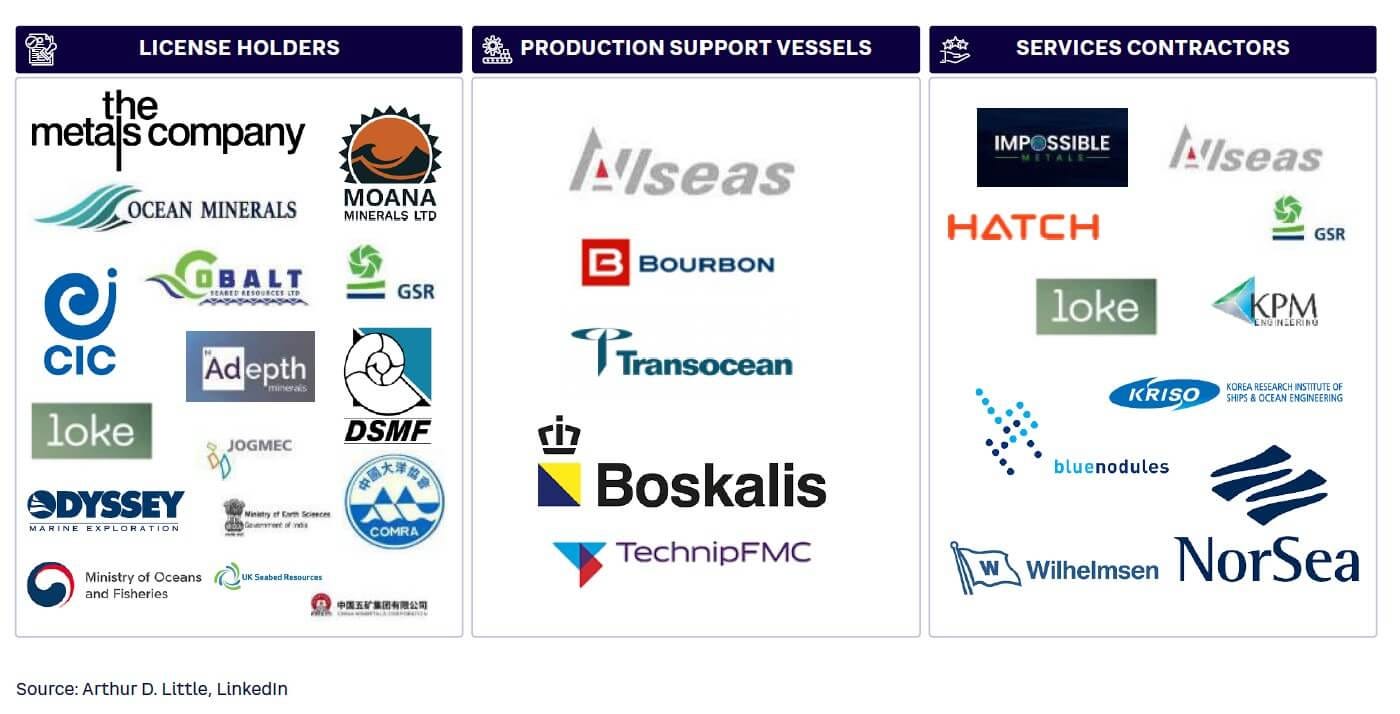
The debate over deep-sea mining illustrates this convergence. Environmental NGOs mobilize scientific findings to argue for precautionary pauses. Mining companies fund environmental baseline studies and publish technical assessments to demonstrate mitigation capacity. The International Seabed Authority sits at the center of this negotiation, tasked with regulating mineral extraction in areas beyond national jurisdiction. Its meetings blend legal drafting, ecological modeling, economic projections, and geopolitical bargaining. Scientific reports are cited not only in journals but in diplomatic sessions and public campaigns.
In this environment, credibility is no longer confined to peer review alone. It is performed in hearings, amplified on social media, contested in press releases, and scrutinized by stakeholders with divergent interests. Oceanographers may find their work invoked by activists, industry representatives, or state delegates, sometimes in the same week. The authority of the scientist persists, but it operates in a far more visible and contested space than the naval laboratories or grant-funded departments of earlier decades.
Risks
The expansion of scientific platforms has widened access, but it has also reshaped incentives. Attention rewards clarity and confidence. Algorithms amplify engagement. Nuance, caveats, and statistical uncertainty do not circulate as efficiently. In academic writing, uncertainty signals rigor. In digital media, it can register as doubt. The structural pull favors certainty.
Personal platforms intensify that dynamic. When a scientist speaks through an institution, credibility is distributed across departments, grants, and peer review. When speaking through a personal brand, authority is concentrated in the individual. Complex literatures may be distilled into repeatable frameworks that travel well online. Simplification is not inherently distortion, but it can compress the range of uncertainty that defines most active research.

Institutional science has formal conflict-of-interest policies, disclosure requirements, and oversight mechanisms. Outside those structures, transparency varies. Commercial relationships may be legal and disclosed, yet the norms governing them are less uniform than those embedded in federal grant systems or journal standards.
For audiences, these shifts blur distinctions between levels of evidence. A peer-reviewed trial, a preliminary preprint, and a mechanistic hypothesis can appear in the same stream with similar visual weight. The medium flattens hierarchy. What changes is not the existence of entanglement between science and power, but the visibility and velocity with which it unfolds.
My Personal Framework
I want to share the framework I have developed for thinking about scientific authority in this moment. At its core, it is a framework built on transparency.
Scientific claims should be clearly differentiated by what they represent. Evidence grounded in peer-reviewed research should not be presented in the same way as emerging findings or informed interpretation. When those boundaries blur, it becomes difficult for audiences to assess what is known, what is uncertain, and what remains speculative.
Transparency in funding and affiliations is essential. Credibility depends on the ability to evaluate potential influences on research and communication. Whether support comes from federal grants, industry partnerships, or commercial relationships, disclosure is not a formality. It is a requirement for trust.
Equally important is maintaining distance between scientific authority and product endorsement. When credibility is used to support commercial claims, the distinction between evidence and promotion becomes unstable. Preserving that boundary protects both the integrity of the research and the clarity of its communication.
A credible scientific voice must also retain a commitment to uncertainty and revision. Scientific knowledge is provisional. It evolves through new data, critique, and replication. Communicating that uncertainty is not a weakness. It is an accurate representation of how science works.
Finally, accountability should not disappear when communication moves beyond institutions. Peer review, disclosure standards, and oversight developed for a reason. As scientists operate more visibly and independently, those expectations should follow, even when the platform is personal rather than institutional.
This framework does not limit public engagement. It defines the conditions under which scientific authority remains credible when it is exercised in the open.
VI. Closing Synthesis
As we have seen across this two-part series, science has consistently been entangled with power. At times, it is difficult to separate the production of knowledge from the structures that support and shape it. That entanglement persists today, including in the growing political pressure and public skepticism surrounding science in the United States. What has changed is not the existence of influence, but its form. Scientific authority can now be scaled, personalized, and monetized in ways that bypass many of the institutional boundaries that once mediated credibility.
The role of the scientist is evolving again. No longer confined to laboratories, journals, or federal institutions, scientists now operate in a public arena where communication is immediate and influence is measurable. The question is not whether scientists should participate in that space. Public engagement is both necessary and valuable. The question is how to do so without compromising the standards that give scientific authority its meaning.
Maintaining epistemic integrity in this environment requires more than expertise. It requires clarity about evidence, consistency in transparency, and a willingness to preserve uncertainty even when it does not travel easily. The future of scientific credibility will not be determined by whether scientists speak, but by how they choose to do so.