
Three Things We Learned from the Deep Sea This Year
What has the Deep taught us in 2025?

Introduction
In 2025, the deep sea stopped being hypothetical. Not in theory, not in models, but in practice. Industrial-scale mining tests moved from projections to observations, revealing measurable ecological impacts across the seafloor and into the midwater. At the same time, international governance caught up just enough to acknowledge those risks, without yet resolving how to manage them.
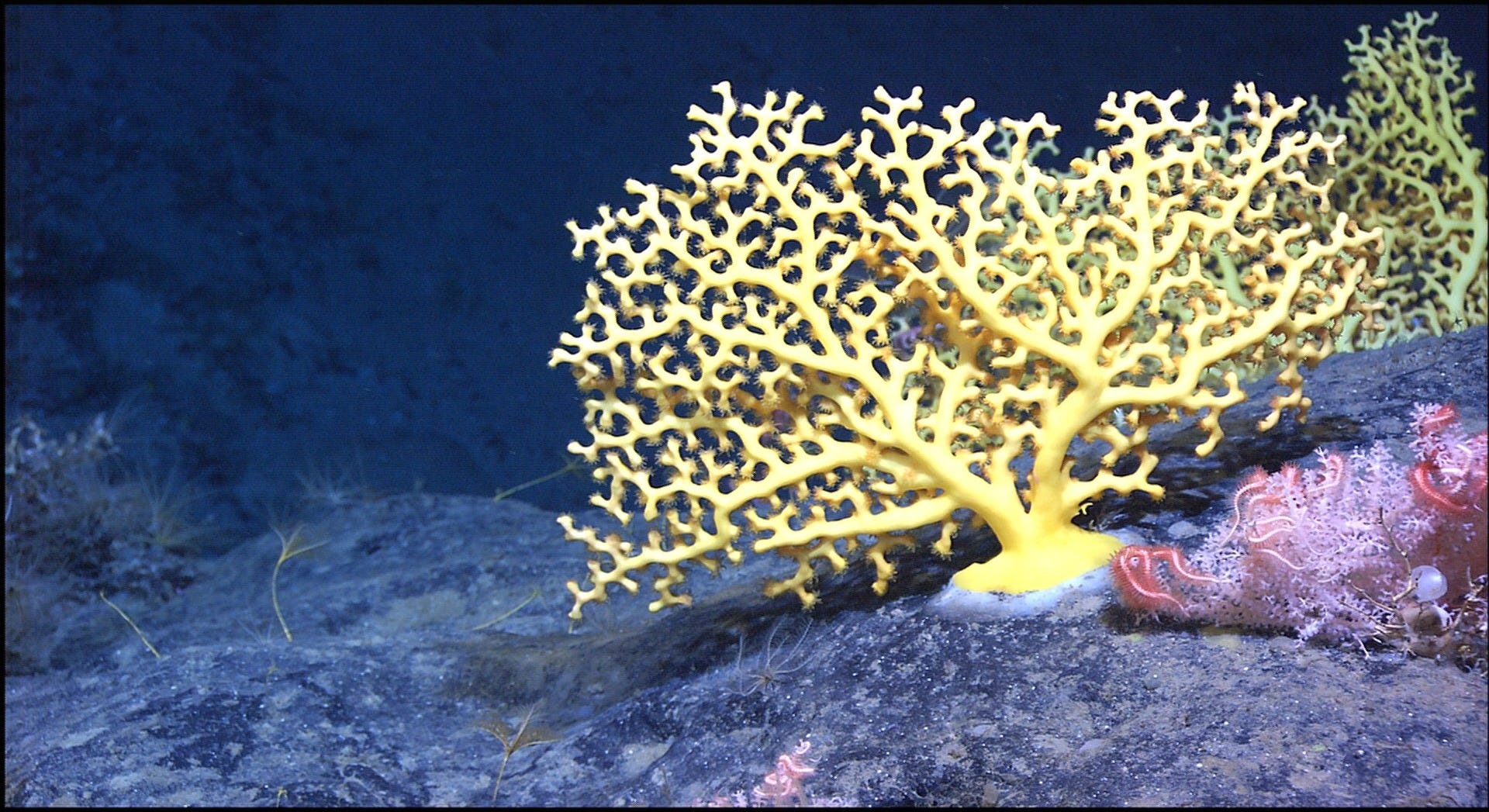
This year’s most consequential lessons did not come from a single discovery or decision. They came from three developments taken together: direct evidence of biodiversity loss following a commercial mining trial, new research showing that mining plumes can disrupt midwater food webs far above the seafloor, and a rapidly shifting policy landscape at the International Seabed Authority, where support for precaution now rivals support for exploitation.
Story #1 : Industrial mining trial: biodiversity loss on the seafloor
A 2025 paper in Nature Ecology & Evolution reported results from an industrial-scale mining trial in the Clarion–Clipperton Zone. Just two months after the test, sediment-dwelling macrofaunal abundance had declined by roughly one third, with species richness dropping by a similar margin. These losses were not confined to the directly mined tracks. Detectable community shifts were observed even in areas reached only by the sediment plume. Note the decrease in abundance (darker blue to lighter blue) in the figure below pulled from the paper.
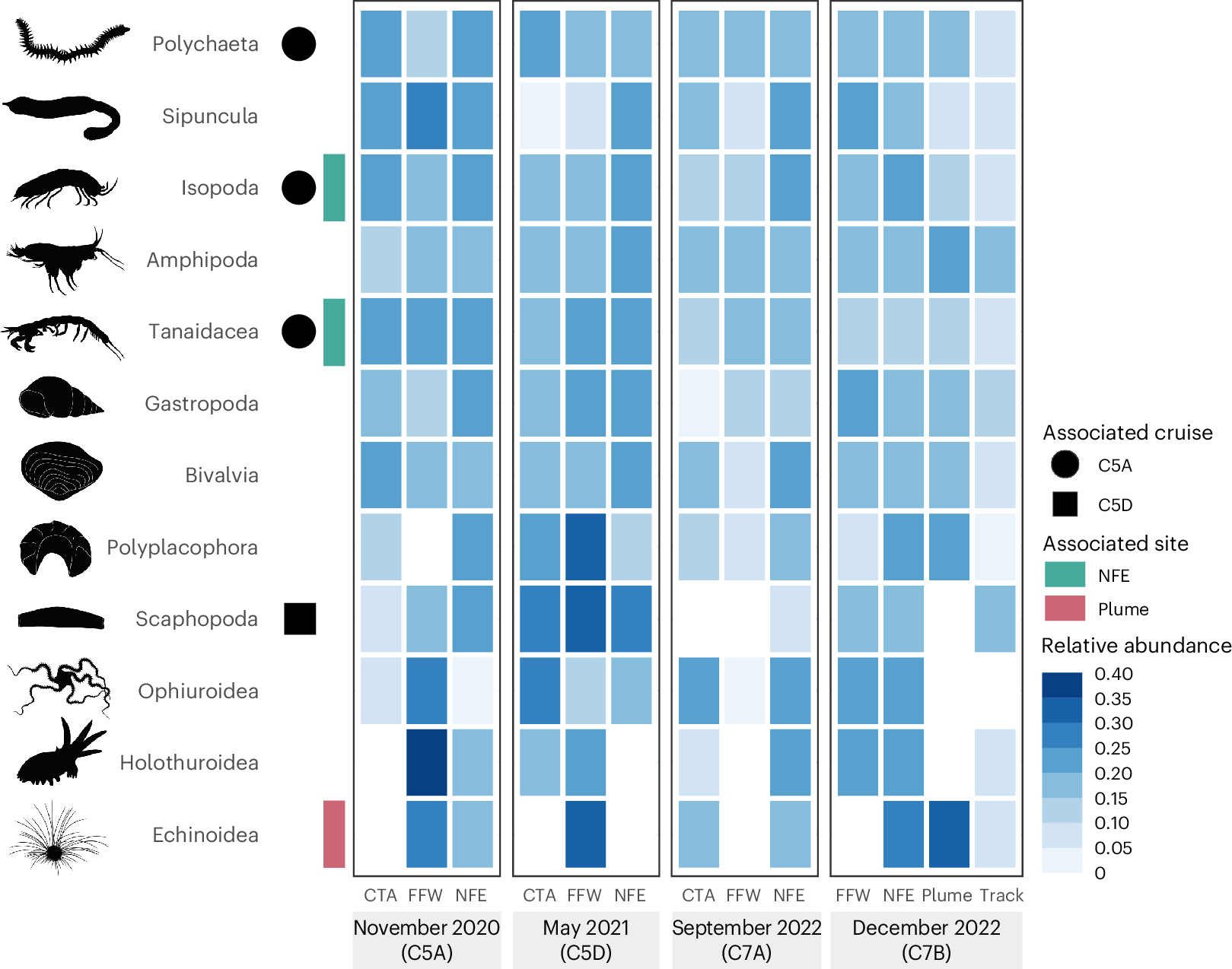
Importantly, the authors framed these results as early-stage impacts of a single test rather than a worst-case scenario. Given the deep sea’s extremely slow recovery rates and the spatial scale of any future commercial operations, the study concluded that widespread and long-lasting biodiversity loss is likely if mining proceeds at industrial scales. This finding directly challenges a long-standing assumption in regulatory discussions: that impacts will be localized, temporary, and manageable through adaptive monitoring.
Story #2: Deep sea mining may impact midwater food webs
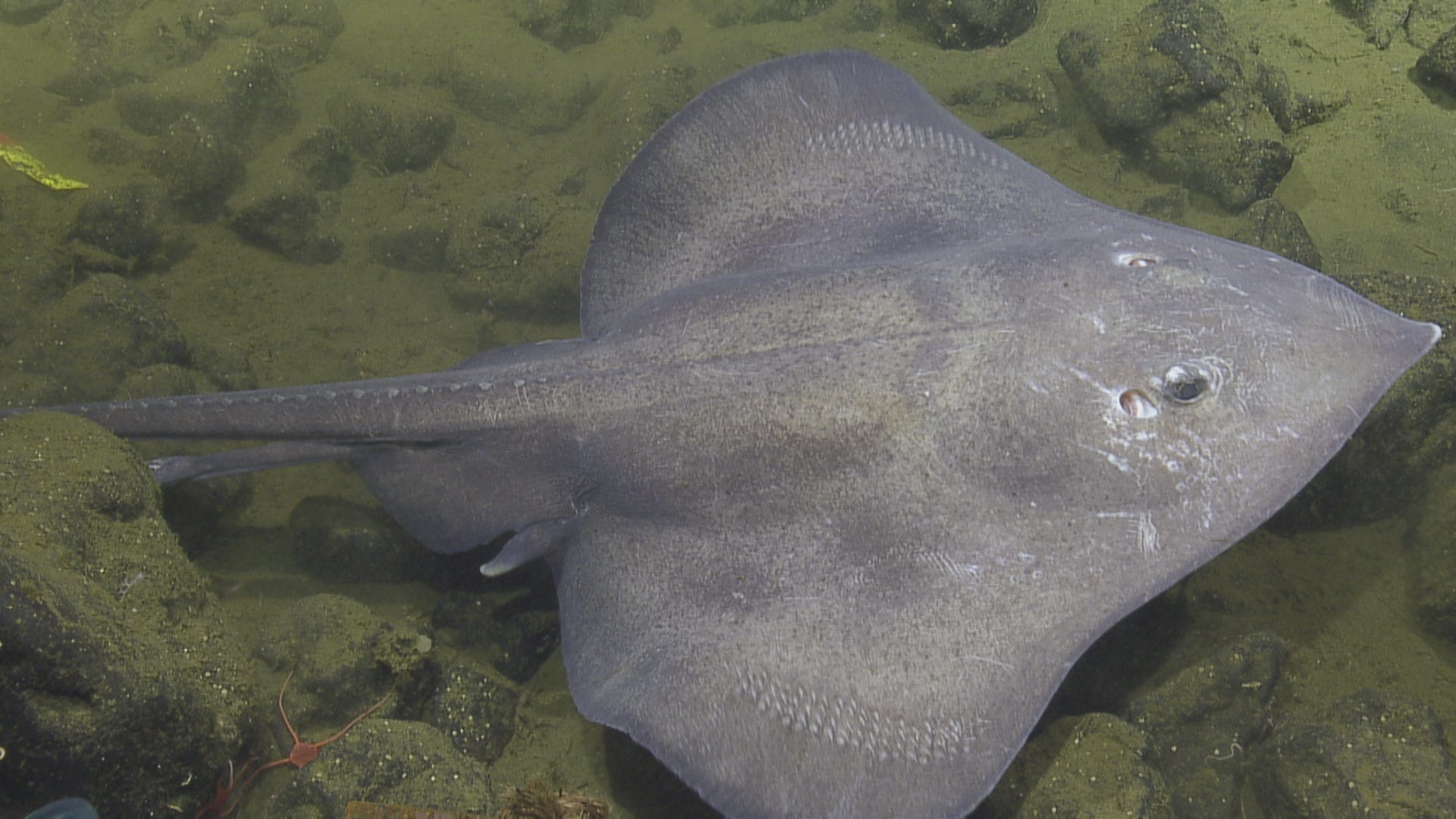
Evidence from the same commercial test shows that impacts are not confined to the benthos. Companion research led by University of Hawaiʻi scientists examined a midwater discharge plume released at approximately 1,200 meters depth. Within the plume’s influence, fine mining waste reduced food availability for zooplankton and small nekton, effectively starving parts of the mesopelagic food web.
The implications extend well beyond the plume itself. Zooplankton and small nekton form the base of midwater food webs that support deep-diving predators, including commercially important tunas. Repeated plume releases could therefore propagate impacts upward through the food chain, undermining ecosystem resilience and fisheries productivity. At the same time, disruptions to midwater communities threaten vertical carbon flux, with potential consequences for carbon sequestration across large regions of the Pacific. The takeaway is uncomfortable but clear: mining impacts move vertically, interact with existing ecosystems, and do not remain where they are released.
See my previous article, “The Sharks You Will Never Meet” for a more in depth analysis of this research!
Story #3: Policy is reacting to science
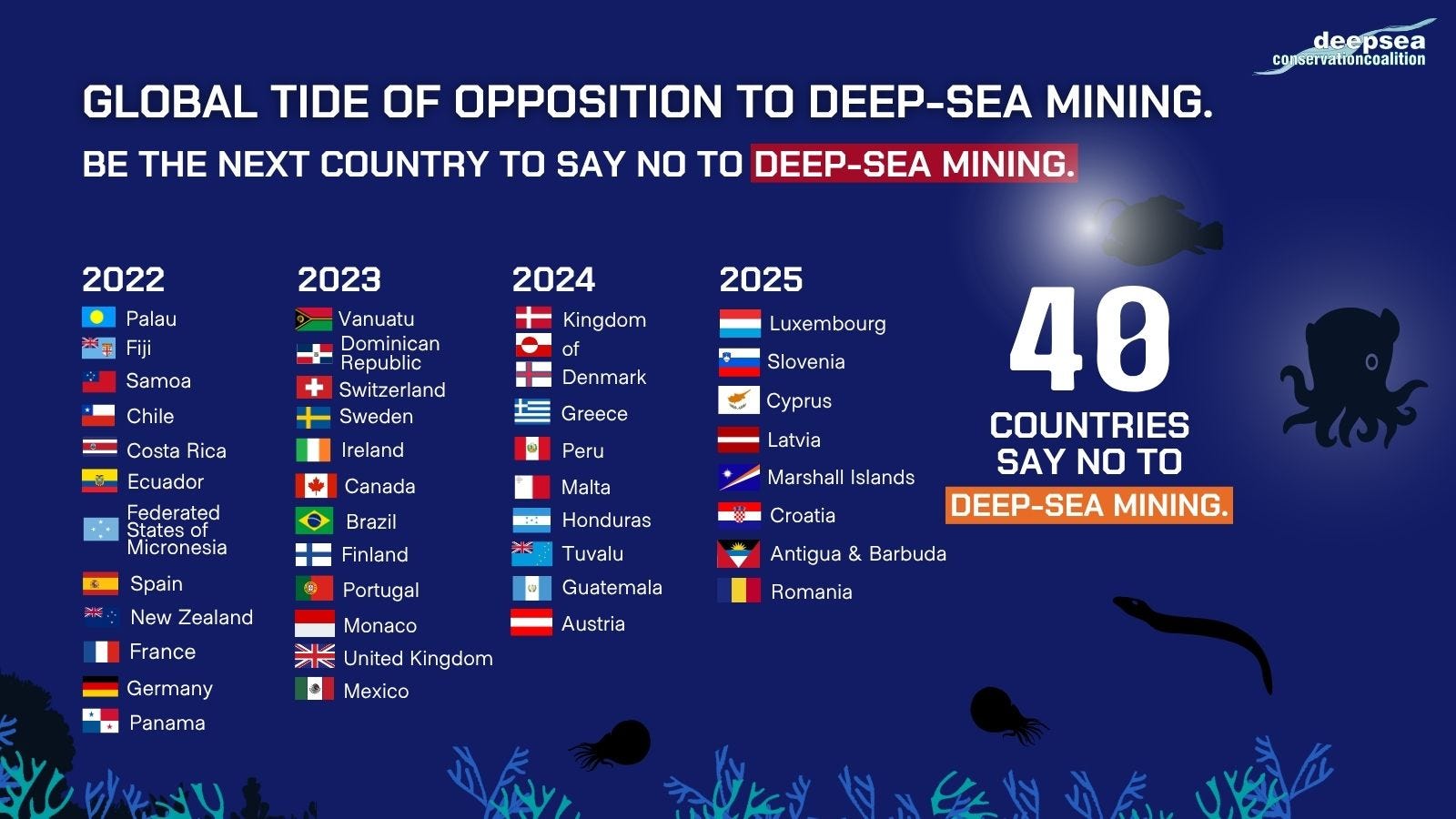
Between roughly 2023 and mid‑2025, the coalition of governments calling for a moratorium, precautionary pause or ban on deep‑sea mining expanded from about two dozen to around 37–40 states, reflecting rapid growth in political resistance to commercial exploitation of the international seabed even as negotiations on the ISA Mining Code continued. Civil‑society trackers and ISA communications emphasize that this support now includes a diverse mix of Pacific SIDS, European states, and Latin American governments, and that the number of governments favouring a halt to mining in the Area already exceeds the number of states on the ISA Council.
That political shift is now being reflected in how negotiations are structured, not just in who is speaking. Recent decisions to adopt a thematic workplan and request a revised, consolidated draft of the Mining Code signal a move away from fragmented, line-by-line negotiations toward clustered discussions of core issues such as environmental standards, financial terms, and compliance. In practice, this means that future sessions are likely to surface disagreements more clearly, rather than dispersing them across technical subcommittees where trade-offs are easier to obscure.
These procedural changes set the stage for 2026 to be a pivotal year. At ISA-31, debates are expected to focus less on whether exploitation regulations should exist in principle and more on whether the conditions for adopting them have actually been met. By grouping negotiations around substantive themes, the process reduces the ability to advance exploitation through incremental procedural progress while leaving unresolved questions about environmental protection and enforcement.
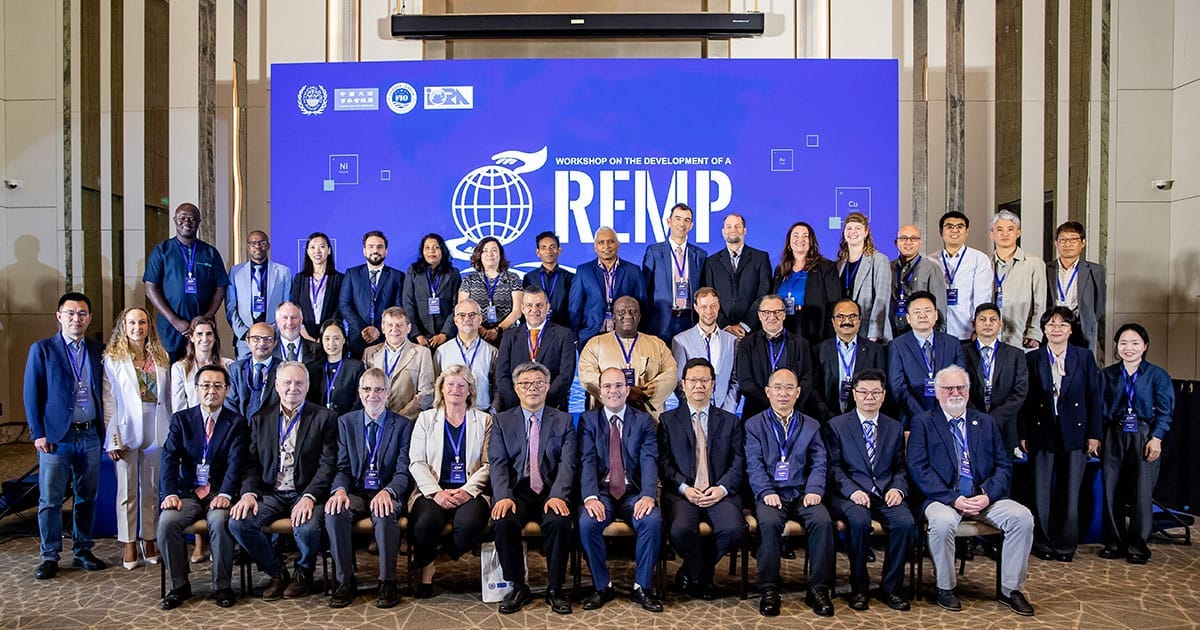
At the same time, the introduction of a more formalized Regional Environmental Management Plan (REMP) procedure effectively hard-codes a science-first sequence into the regulatory pathway. Before any exploitation approvals can credibly move forward, states will be under pressure to demonstrate that regional plans are complete, environmental baselines are adequate, and agreed scientific procedures have been followed. In 2026, arguments that “the time is right” to adopt the Mining Code will increasingly hinge on whether these prerequisites are demonstrably in place, rather than on political momentum alone.
“Ultimately, we aim to strengthen our shared capability to manage global commons beyond national jurisdiction.” Mr. José Dallo, ISA’s Director of the Office of Environmental Management and Mineral Resources (from May REMP meeting)
What this means for the next year
In the coming year, attention should focus on two things. First, how ISA negotiations evolve under the new workplan, particularly whether environmental standards, REMPs, and compliance mechanisms are resolved before any move toward adoption of the Mining Code. Second, the results of upcoming public research expeditions, especially those aimed at establishing environmental baselines that will define regulatory thresholds. Together, these processes will test whether scientific evidence constrains decision-making, or is absorbed only after outcomes have already been decided.
Policy References:
https://isa.org.jm/sessions/30th-session-2025/
https://enb.iisd.org/international-seabed-authority-isa-council-30-2-18jul2025
https://enb.iisd.org/international-seabed-authority-isa-council-30-2-9july2025
https://deep-sea-conservation.org/solutions/no-deep-sea-mining/momentum-for-a-moratorium/governments-and-parliamentarians/